AddThis script

Showing posts with label single ventricle heart. Show all posts

Tuesday, May 15, 2018

Grief and pointlessness

Riley's jerseys
Gray clouds were smeared across the San Carlos sky like a thick layer of jam on that Saturday morning a few weeks back. It was early, but not too early as I set up my stadium chair at the top of the bleachers. With my cup of decaf, I cornered myself, away from other parents as much as possible because I was solo that morning. C’s dad was out of town; C’s stepmom was out of town; my husband was working. It was just me and I hate mornings when it’s just me at the Little League game. I just don’t know how to fit in. So I put myself in the corner and pretend I’m invisible. Then I scan the opposing team for blond boys with blue eyes and glasses that I can pretend my dead 11-year-old son is there. So that I can cheer for him silently. So that I can pretend that Riley is still playing baseball.

As the innings progressed, the clouds thickened and then colluded to make everyone and everything wet. It started as a few drops, but quickly progressed into a downpour. After a few minutes of rain, the umpires called a rain delay. Most people -- including the kids from both teams -- moved under the awning of the snack shack. I pulled my hood over my head, but stayed put. If I didn’t move, then no one would see me. I felt like a deer, frozen in place in my winter coat with the hood pulled over my head in an attempt to stay dry and invisible. One minute. Five minutes.

The other parents eventually joined the kids under the awning. Why hasn’t the game been called, I wondered. But I couldn’t ask anyone. I don’t know how to talk to the other parents. Do they know I have a son named Riley? I don’t know how to talk about the score or the at-bat or the home run. It’s easier to stay invisible. Ten minutes later and the rain continued.

For the sake of my son’s health, I mustered the courage to approach the team under the awning. I pulled him aside. “Do you want to go home?” I asked. “The game isn’t over yet,” he said. “But you are soaked and it’s cold. I’m worried you’re going to get sick. And it’s just baseball,” I said. “It’s okay. I want to stay.” I said okay and went back to my wet chair in the bleachers. A few minutes later, the drops became less frequent and the umpires said the game could resume as patches of blue punched through the jam layer.

The children went back to their sides of the field, their dugouts. The parents reclaimed their spots on the bleachers.I could hear their voices nearby. They talked about the rain delay. They talked about the score. They scolded their children for not catching the ball when they thought they should have caught the ball. They scolded the teen umpires for calling their child out when they believed that their child was safe. They cheered when a bat made big enough contact with a ball that allowed their child to run to second base without the need for scolding.

It’s all so pointless, I kept thinking. All the cheering and scolding and celebrating and complaining. But then again, what’s the point of anything? It’s all just a way to pass the time, to get through the weekend. An excuse to take pictures to hang on the wall. Something to do as a family. I don’t think it felt pointless when Riley played for all of those seven years. It was a place that he felt normal. A place where a uniform made him look like all of the other kids who had two ventricles and a spleen and their heart on the correct side of their chest pumping blood to its neighboring lungs and then to the far reaches of the body with ease. A place where I let myself believe that he was just like the other kids. And that him growing up was just a given instead of a fear sewn into my DNA that expanded and contracted with every breath.

Monday, December 21, 2015

Grief and A Leap of Faith

my child died CHD
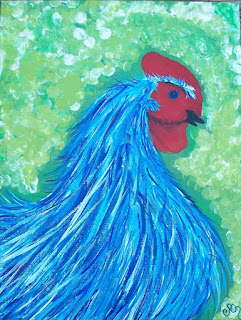
Gorgeous art from Issue 3 of Six Hens
* Note to reader: This is the "Letter from the Editor" from my literary magazine Six Hens. Issue 3 launched today. Feeling enormously proud. Read, feel something, share... *

A nurse tapped on the door before turning the handle. “I thought you’d want these,” she said as she approached me. She offered two Polaroid pictures of my newborn. Curiosity or instinct elevated my hand to receive them. “He’s beautiful. Do you have a name?” I shook my head then parted my lips to thank her. My words were reflex rather than gratitude.

She switched to nurse mode, asking when I’d last urinated or if I’d passed any clots larger than my fist and whether I wanted to breastfeed. When I said yes to that last question, she said she’d arrange for a lactation nurse to explain the basics. I didn’t protest, although I couldn’t understand how I could learn to breastfeed without a baby. Then her cool fingertips pressed my doughy abdomen. After her exam, I felt her access me in a different way. “You need to name him,” she said softly but firmly. That wasn’t any of her business. It wasn’t part of her job. But she must have heard about his x-ray, the one that showed his heart on the opposite side of his chest. She must have seen paperwork declaring “probable heart defect.” She must have known it was serious. She must have known that naming a newborn—even one with scrambled up insides—was more important than the possibility of him dying nameless.

Chalky morning light muted pinks and blues on the walls of the small room in the recovery ward of that Northern California hospital. It was before rush hour on April 3, 2003. Blankets and pillows swallowed me, but I was cold for the first time in months. My eight-pound-two-ounce furnace was in the nursery somewhere else on the floor. My fingers gripped the edges of the Polaroid pictures, which were face down on my lap. I flipped them. They were almost identical, showing a round-headed baby, eyes closed, head turned left with a breathing tube disappearing into his mouth. One image showed his torso where the umbilical cord stump had been removed. His skin was orange-red from iodine, which could’ve been mistaken for blood. I had read that a newborn’s stump normally fell off several days after birth, revealing a bellybutton. Our son, who we had yet to name, needed his cut away to use as a place to insert an IV.

I thought back to the moments after he slipped from my warm body into the cool, room-temperature air. As a hushed urgency of doctors escalated to my right, I noticed the baby was silent. “Ken? Is he breathing?” I asked my husband. He was, Ken said with his arms crossed tightly over his chest, “but something is wrong.”

A few minutes later, a nurse asked if I wanted to hold him briefly before they took him to the nursery for more tests. “I don’t think so,” I said unconvinced. After twenty hours of labor, my body was relieved to be free of him.

“You have to hold him,” Ken said. I reluctantly agreed. With my baby wrapped like a burrito in a blue, green, and white hospital blanket, the nurse set him on my chest so that I could see the creature that had been rolling around in my tummy for months. He wasn’t the most beautiful thing I had ever seen. His skin looked ashen, his face was contorted, and he was stretching his neck; it looked liked he was in pain. It felt like everyone waited for me to ooh and aah over him. But I didn’t. I just looked at him, at his twisted expression. The nurse said they had to take him. I didn’t want him any longer anyway. I felt faulty because I was not instantly in love.

When my husband returned to the recovery room, he explained that a neonatal transport team was on their way to ferry our baby to UCSF more than fifty miles south. I gave him the pictures. “You can go see him,” Ken said as he studied the photos, “if you’re ready.” When I didn’t respond, he lowered himself into the plasticky armchair to my left and took my hand. He looked thin, and dark patches underlined his pale blue eyes. It had been nearly nine hours since an initial newborn assessment forked us into separateness; I refused to accept that things were going horribly wrong. Surely he was just exhausted from being born; I was exhausted from giving birth. A few minutes later the nurse returned and parked a wheelchair next to the bed. I hesitated. Did I want to see my baby? A good mother would want to. Surely I was a good mother. Like a sack of rice, I slouched as Ken rolled me along. In a hallway carved of fluorescent light, it felt like we moved forward and backward simultaneously.

When we arrived in the nursery, I don’t remember seeing any other babies or cribs. Instead, the small space was crowded by neonatal transport experts. They prepared a special plastic box—a high-tech mobile incubator that would be placed in their ambulance. Plexiglass and a wall of EMTs separated me from my son. Through uniformed bodies, I could see bits of baby. An hand here, a knee there; so tiny, barely human under the web of intervention. He was enclosed, packaged, foreign. I wish I’d kissed his moist skin, inhaled his mossy smell when I had had the chance. The team assured us that he was stable and would be in the best of hands on his fifty-six-mile ride to UCSF, one of the top pediatric cardiac centers in the country. And then they were gone.

Kneeling in front of me as if he were about to propose, Ken’s warm hands reached for mine and pulled them to his damp face. Holding my gaze for a moment before putting his head in my lap, there was nothing to say. My fingers pushed through his trim brown hair and convulsions began. Unfamiliar sounds built in my diaphragm and erupted from my mouth, penetrating an otherwise quiet corridor. Nurses walked around us. No one asked us to move. We were left to mourn that moment. His birth. The unknown.

Eventually Ken pushed himself from the speckled linoleum and assessed my droopy posture. He brushed matted hair from my eyes. In whispers, we decided he should drive to UCSF, the hospital on a hill in our old neighborhood near Golden Gate Park, instead of waiting three more hours until I was allowed to be discharged. With that, he wheeled me back to our tiny room and helped me into bed.

“We have to name him before I leave,” he said with arms folded. I looked at his body, his denim pants and T-shirt, his waning hairline. Only in a twisted world would I debate pros and cons of naming my baby.

I hugged myself, squeezing my arms, rubbing open palms along my sides and over my vacant, shrunken stomach. “Okay,” I said after a long silence, still unsure. “Where’s the paperwork?”

He grabbed the form from the end table and clicked the end of a pen. The lines were long and blank. Without knowing his diagnosis or prognosis, I thought of the nurse, her prodding, and assumed a named child would be harder to forget than an unnamed child. He picked up the Polaroid photos and put them next to me. I studied the baby’s face and hoped it would tell me what it should be called. The blankets vibrated as my muscles shook. The stack of thin layers over my limbs didn’t seem to make a difference. After sinking down further, my eyes closed.

“We both like Riley,” he said, doing his best to keep me engaged.

My eyelids rose and focused on him. He nibbled at his cuticles as he waited for my response.

“I still like Mackenzie for a middle name,” I whispered eventually. “It means son of Ken. Then everyone knows you’re his dad. No one ever wonders who the mom is.” With that, he pushed pen to paper and our son’s name appeared. I sunk lower, clutching a pillow. He kissed my forehead, gathered his things and left.

It was incomprehensible. Riley was gone. I imagined miles of highway separating us, when nine hours earlier we had been connected. His flesh inside mine, held safe with breath and heartbeat. Nothing felt safe anymore. Ken drove home for a shower and fresh clothing before braving that unfamiliar San Francisco hospital, where he would start learning about our imperfect son, a baby I grew so horribly wrong.

It was just me in that little room. I had labored. I had delivered. But I was alone.

I didn’t know it at the time, but naming Riley despite terrifying uncertainty was a leap of faith. It was me desperately wanting him to be okay, hoping it was all a misunderstanding, a mix-up. It was also the first of many moments that define this mother’s love during my son’s truncated, eleven-year lifetime. He would have turned twelve on April 2.

Check out more powerful writing in the third issue of Six Hens!

Suzanne Galante, Editor in Chief

Friday, March 13, 2015

Grief and Opening Day

I’d forgotten about all the socializing and cheering that happens at Little League games. I am not up for socializing or cheering. I hid under the brim of my cap at the edge of the field or against the wall of the nearby school when C played this past week. He had two games since Opening Day, and Opening Day was last Saturday. All that playing put me in the middle of more social situations than I’ve been in since Riley died in October.
Life goes on

Over there, across the blacktop is a mom whose taken C after school several times since Riley died. She’s talking to a woman that I recognize, but am not sure I’ve ever officially met. She scoops her long hair with her arm and it cascades down her back. There is smiling and laughing and small talk; there is clapping and an ease at just being in the moment talking with a friend. I’m largely scared of the non-grieving population, as I’m sure they are largely scared of me. Sunglasses are adjusted, hair is twisted and tied at the back of her head. The sun bakes our mid-March bodies, forces layers to be peeled away and pale skin soaks the up the heat and threatens to become pink.

Their interaction seems effortless, easy, relaxed, normal. I wonder about the baseball season three years earlier when Riley played on this field. At the time, the kids seemed so big, grown-up, skilled for eight- and nine-year-old players. They whacked the ball into the outfield. They sprinted to first base. They dove to catch balls that seemed almost out of reach. I notice the kids on the field doing those things now. When did C become a big kid?

When Riley played on this field those three years ago, I made a connection with another player’s mom. She marveled at my son who’d endured five heart operations, yet was very much alive. Very much a part of the game. Very normal looking despite his mixed-up insides and uncertain future. That season she joined me in celebrating Riley’s accomplishments. To an outsider, my enthusiasm and praise may have seemed beyond what was called for, beyond what a child with normal abilities may have received for hitting, catching, running, and just swinging his bat. Every at-bat was praised—every walk, every foul ball, every strike out. For trying, for getting back in there again and again, even though it was hard for him, the boy with the faulty heart and not enough oxygen to nourish his cells.

Riley didn’t run fast—it was more of a shuffle—so if he shuffled to first base after getting walked, it was a big deal. If he snagged the ball from the air, it was a big deal. As he trotted to the grassy spot where the ball smacked the earth after missing his glove, I cheered. Him showing up again and again for every game and every season—he played for seven years—was a big deal. He was out there trying, even though each of those things involved an effort so far beyond normal effort. He loved the game.

I always feared the day he would decide not to play another season. When the games became more about winning and less about having fun. When he felt his struggle on the field was hurting his team and decided to use his energy reserves for something more stationary like art or reading. He never made that choice. And I’ll never know if he would have signed up for this season. I like to think he would have. In the meantime, I go to C’s games and wonder about the cheering and the life-goes-on normalcy around me. Like so many things in life, I will always feel sad about all of the things that did not happen, the life experiences un-experienced, the milestones met and marked by others, the seasons coming and going, the beginnings and the endings.

C had been invited to throw the first pitch on Opening Day for the league Riley would have played for. Some of Riley’s friends showed up and helped C warm up his pitching arm. C told me: “I feel sad all of the time, even though I don’t always look sad on the outside.” I was amazed at his eloquence; that's definitely how I feel too. That morning on the mound, he looked proud and happy and sad and nervous. That’s probably how I looked too, at least when I wasn't hiding under my hat.

Thursday, January 29, 2015

Grief and time

When babies are brand new, we talk about how old they are in days, then weeks, then months. Eventually, we move on to years and halves. I have an 8 ½-year-old son. I had an 11 ½-year-old son. That organizing of time seems to be happening in death as well. Right after Riley died, it was, how did he die four days ago? Then, how did he die two weeks ago? And when I started writing this, on the 20th of the month, I wondered how it could be that he had been dead for three months.

How do I keep living when he is not? The months keep piling up without him.

Top of Mauna Kea, elevation 13,796 in honor of my son
A weeklong retreat to the Big Island earlier this month gave my aimlessness shelter. While being aimless at home feels like laziness, being aimless in Hawaii with close friends felt natural. So many people are on vacation and being aimless is often the point of being on vacation. An entire day was spent in a cabana crying and laughing, the ebbs and tears flowing and retreating like the water pushing forward along the sand and then receding into its own vastness. Emotions rode that surf as it gently tapped shore and simultaneously pounded the rocks 300 feet offshore. They were both of those things at the same time, not unlike when I can laugh and then instantly feel pummeled by the waves of grief pushing me under every time I notice his absence, which is constantly.

One day we ventured to the highest peak in Hawaii, Mauna Kea. There were snow-covered rock faces and thin air. The elevation changed our breathing and made our motions slightly slower. Being there was profoundly beautiful, yet ordinary for most humans with healthy anatomies. I felt lightheaded and heavy-hearted. I had avoided elevation most of Riley’s life. How could I go to elevation when he could not? Yet there we were on the top of that mountain for Riley. At the Celebration of Riley's life, a friend distributed wooden token that he had had made. One side says, Climb a mountain in Riley's memory. The other side has a picture of Riley's likeness. We honored Riley on that mountaintop and reflected on all that has happened from that new perspective. Two of my kids had painted stones to leave there. The idea was that we could discover them during a future visit. The perfect hiding spot was under a large volcanic boulder with a bit carved out on one side. I pushed the stones in and covered them with rocks.

The process of burying those stones was surprisingly painful. Leaving them behind felt like abandoning Riley alone in the cold, thin air. It was like I left pieces of him unprotected to endure the elements without me looking out for him, without me taking care of him. No, the stones aren't actually my son, but the symbolism was not lost on me.

Returning to my Northern Californian town was unsettling. Being aimless here feels much less acceptable. There are routines and schedules and lunches to make, days to endure, weeks to pass. And soon enough the 20th of the month will reappear. Every single month, round and round we go, the accumulation of life without him. Eventually October will come around and stab me with each of its passing days. One year, then two, and then somehow my 8 ½-year-old son will surpass my 11-and-a-half-year-old son in age and the younger brother will become the older brother.

Sunday, January 04, 2015

Grief and light

As I sat on the sofa in my friend’s mountain house, a ball of light burst onto the painting of trees opposite me. The condensed glow was the tired afternoon sun splashing its last rays before drowning, and I was entranced because in it, I saw you, sweet boy. That splash of light was you in the room with me in the mountains, a place we didn’t go together when you were alive because elevation was not a place you were allowed to visit. The altitude could not provide you with enough oxygen. But there you were for a few minutes. And just like your short life, the glow inched to the edge and disappeared. Then the trees on the painting, just like my life, were dark. You were gone.

As the light glided across the picture, my husband sat and watched it with me for several minutes. He
Moonlight and death
Moonlight and death
saw a bright spot on the wall, the simplicity of the setting sun. I found the profundity of your soul or your energy or whatever you want to call that thing I need to believe still swirls among the atoms in my universe now that your physicality from it is gone. Nothing has face value anymore. It was you. I know it was. It has to be because seeing you in the inanimate things around me is the only option from now on.

Green was your favorite color. Your favorite shorts were green; your school binder was green; the comforter you chose for your bed was green. You wanted to paint the walls of your bedroom green. So what do I do? I see you in the greens of nature. I see you in the shade of green that we painted our front door. And just as I saw you in the vertical beam of light on the wall after your heart stopped in October 2014, I see you in every lighted spot the sun manages to push through window shades and door jams. But the fleeting beams of sunlight and the green paint and sprigs of grass and spindly pine needles are pointless because they bring you no closer.

Yet finding you all around is what people want me to do. “We do these things to remember him and to nurture this new relationship we have with him,” someone told me. I don’t want a new relationship with my eleven-and-a-half-year-old son. Yet, what choice do I have other than to adapt? The relationship we had is never coming back.

Even with the green and the glowing reminders, I don’t need visual cues to think of you. I breathe you; I exhale you; you are always sitting on my lap and holding my hand, in my mind. You are humming as you etch the math answers onto the paper, in my mind. You are peeling garlic next to me, popping raw cloves into your mouth, in my mind. You are organizing your bottles of Tabasco so that all of the bottles are neatly facing forward, in my mind. You are petting the dog, shouting: “Pepper’s tail just hit me in the penis” just so you could say “penis” loudly in the living room, your smile counteracting your attempt at indignation, in my mind. All of it, only in my mind.

Let’s be honest, shall we? Moving through grief is all about me accepting the world as it is, with exactly the people who tread upon it—no one more, no one less—is it not? One day I will go to buy groceries without feeling panicked when my husband is not in my line of vision. One day I will go to the café and order a latte with a friend. One day—I am told—that your memory will make me smile instead of burn with the need for your forgiveness. Only then will I stop pleading: “ Please forgive me, Riley,” my nightly mantra as I will you into my dreams.

Thursday, December 25, 2014

Grief and the first Christmas

Outside there are lights glowing. They are hung around windows and along fences. They are inside too. Twinkling greens and reds and whites probably hug a tree in your living room. At the same time, there is darkness.

You can’t see it from your comfy couch, from the seat next to the fireplace near the twinkling lights. This darkness is inside my house. It festers inside of me. The flow of circulation, the beat that pushes blood, the exhale that forces the inhale—it is all gone and replaced with darkness so deep that I’m still falling, yet to hit the jagged floor. I give up. I give up already. You have won, Darkness, and I surrender. Anything you want, I give. Take it all. Just give me my son back. He died in October, and I have suffered enough. How do I make my 11-year-old son's death undo itself? How do I make his failed heart operation a success?
My son died.
And then there were three...

You’ve stolen from a mother’s arms. Stolen love from a younger brother’s heart. Stolen friendship from a boy who catches the ball, who always pulls his friend’s backpack. Stolen a companion from the siblings whose tribe is broken and uneven without their brother, the boy with the faulty heart.

I avoided Halloween as I prepared for my son’s memorial; I avoided Thanksgiving by ignoring it, any nearby merriment drowned out by the reliable ocean smacking the beach near our campervan again and again and again. But not Christmas. It came into my house. The tree’s branches punctured my lungs and made them weep. Darkness drips from those wounds.

This is Christmas, friends. So this is Christmas.

Monday, December 22, 2014

Grief and ranting

Glossy magazines glorify tragedy. Everything is summed up in 800 words and the tragedy becomes a feel-good piece. It’s spun so that a positive message is felt by the person experiencing the loss as well as person reading about the loss. It's fake. A handful of well-meaning people, who have probably read those glossy articles or seen glossy TV, have told me to snap out of it, get out of bed, out of the house, to be grateful for what I had/have, and face the world. That Riley’s goodness supersedes his death. Society wants me "to get over it," to have "closure," to be grateful that I have other kids. Not every story has a moral. And no matter how we spin it, Riley was better alive than he is dead.*

C only knew life as Riley's younger brother. He knew who he was because Riley reflected who he was back at him. For years, his sentences ended with: “Right Riley?” And I only know parenthood as Riley's mom, as the guardian of the boy with the crap heart. And now that he's died, I'm lost and I feel like a cliché. I'm broken, fragile, and shattered. I have lost any sense of self-esteem, I cower away from people and situations, am forgetful, stutter at times, am easily startled, and am entirely exhausted and drained. I start sentences with the phrase, “My therapist says…” For the rest of my life, I will try to figure out how to live without him, and I'm being gentle on myself and helping around the house and with the kids when I feel up to it. I suppose doing anything beyond the comfort of bed is progress from where I was a handful of weeks ago.

It sounds bitchy and horrible, but my other children are not Riley, and I don't feel grateful for much of anything right now (that doesn't mean I don't have things to be grateful for...my list is very long, but it's hard to have perspective on that even though I know there is much to be grateful for). I always told Riley, "Don't ever let your heart be an excuse for not trying your best." And he has recently told me, "Don't ever let my death be an excuse to lie around in bed all day." I hear him. I hear all of you. I'll eventually get there.

Also, Riley is with me in spirit. He is part of my essence, just as I was part of his. He is everywhere. And yet he is nowhere. And having him in spirit is not the same as having his skin to caress, his hand pressed into mine, his hair to bury my face into. They are different. Your attempts to convince me otherwise are your attempts to make sense of something that doesn’t make sense and will never make sense, no matter how many times you throw God’s will into the mix. And if my brand of mourning happens from the comfort of my bed with my laptop warming my knees, I'm okay with that.
My son died
My son last Christmas, not hiding his scars

So yes, I have four children and I don’t have four children. I can hug three of them. I can tuck three of them into bed. I can hear three children’s voices. One of them I can hug only in my mind, I can listen to only in my thoughts, and his empty bed will never we warmed by his beautiful and imperfect body. I assure you, gentle reader, that they are not interchangeable.

For 11 1/2 years, I rehearsed Riley's death. I imagined it his whole life. And as horrible as I imagined it, imagining it is nothing like living it. The permanence of it is crushing. With each of his other hospitalizations, it was horrible and horrific, but it ended. He eventually stabilized and came home. There is no coming home. There is no going back. This is forever and all I want is for it to unwind itself. But here I am instead. I will lie in bed and write and cry. I will take C to the dentist and the kids to school. I will be mad and scream into the carpet until I burst hundreds of capillaries around my eyes. I will also laugh and feel lightened when Riley sends letters into my head as he did the other day. It's so fucked up and unbelievable and unbelievably true. Yes, my husband and my other people need me. My therapist says that life is a marathon and not a sprint. And I get to fumble around in grief on my own timeline, even if it makes you uncomfortable, even if you think I'm doing it wrong.

My spectrum of feelings on any given day—or hour, or minute, for that matter—is broad, nonsensical and nonlinear. I will take the time to grieve in my own way, feeling all of my feelings that crush and motivate, that paralyze and swell, that punish and rage, that open the lines to communicate and clamp them down again, and I will not apologize for any of it. Rant complete...

*To be clear, Riley alive and suffering is not better than him being dead and free from medical horrors. When I say, "Riley was better alive," I’m talking about Riley living, away from the hospital, going to school, spending time with friends and family.

Monday, December 15, 2014

Grief and other people

Before Riley went into the hospital in October, he had to have his teeth checked by a dentist. This extra dental appointment happened before each of his surgeries. When he was in the soft chair, reclined for optimal viewing and the dentist asked how he was doing, Riley gave with a matter-of-fact reply: “I’m having heart surgery this week.” The dentist and the technician exchanged glances before cobbling together a response. “Heart surgery? Oh, wow.” (To be fair, what do you say to an 11 year old who just told you that he’s going to have heart surgery in a couple of days?). That was followed by, “Well, let’s take a look…”

Since Riley and his brother have always been together--at every dentist appointment and pretty much everywhere else since C was born--the dentist asked about C. “Oh, he’s at school and probably due for a cleaning as well,” I said, “but we’ll take care of that on the other side of the hospital. Hopefully November or December.”

My son died
I used to have four children

Anyone who knows Riley knows that he died after complications from heart surgery. That is one of the reasons that I’ve avoided going anywhere. I’m afraid of seeing people who know Riley, who know me, who know my family. I’m afraid of seeing my sorrow reflected back at me. I’m afraid of seeing pity or relief that it was my kid and not theirs. When they ask, “How are you doing?” Do I say fine? Do I say terrible? I’m pretty sure no one actually wants to know I’ve lost of bunch of weight. No one wants to know that I’m still taking the anti-anxiety medicine and the sleeping medicine. No one wants to know that as soon as I fall onto the couch or heave myself into bed, my leg shakes uncontrollably. No one wants to hear how dividing Riley’s death has been. Before Riley died, I had four children. Now I have one dead child and one living child and my husband has two living children. No one wants to hear that spending time with the other children does not make me grateful that I have the other children. It simply illuminates that there are three instead of four. I suspect they do want to hear if I’m thinking about having another baby.

In the handful of times that I’ve gone to the store with my husband and the clerks have asked How are you?, I know they don’t really want to know. What I’ve wanted to say is this: “Not very well actually, my son just died.” I say hello instead. Hello seems less rude, although I'm not sure why saying that my son has died seems rude. When they say Have a nice day or Happy Holidays, I just lower my eyes. Social niceties are too loaded. For the children’s band concert at school, I wore a cap low on my face and avoided eye contact with hundreds of families. I peaked glances at the students, hoping to see Riley’s friends. I’ve missed them. I sobbed while they played and made the decision that I want to go the high school graduation ceremony for Riley’s class six years from now.

But C’s dentist appointment was different. The dentist falls into a small, special list of people who know Riley, but who do not know that he has died. This small list of people who will ask about him and I will have to tell them. I will have to speak this horrible truth. I even talked about it with C on the way to the appointment. “They will probably ask about Riley,” I said. “What would you like to happen when they ask?” I wanted C to have a say without leading him to want one thing or another. “What do you mean?” he asked. “Well, do you want to answer or would you like me to answer when they ask about Riley?” He thought for a minute and decided: “I want you to answer.”

The receptionist said hello when we entered the office. We sat down and I pulled C onto my lap. I felt less exposed with his weight pressing into my legs. I grabbed a magazine featuring several different kinds of pie and asked him to name each kind pictured. As he guessed at apple and pumpkin and chocolate, she leaned over the desk and casually planted the question I’ve dreaded. My eyes swung over to her face and my lips opened. “Riley died,” I said, holding her gaze for a moment. “Oh,” she said. I looked back at the magazine cover and squeezed C. A minute later, she leaned over the desk again. “How was your Thanksgiving?” And just like that Riley’s death had come and gone for her. For me, it was real in a new way.

Wednesday, December 03, 2014

Grief and forgetting

Bedroom on wheels
On Thanksgiving I was in a tiny camper van with my husband and our dog. The interior was blue and white with a little kitchen and a mini shower stall. There was nothing to distinguish that specific Thursday from any other day that week. 

Since my son died six weeks ago, I’ve spent most of my time horizontal in the safety of my blankets cushioned by piles of wet tissues. In order to get me out bed and out of the house, my husband rented what he called our “mobile bedroom.” The safety of bed could travel with us. There would be sunsets out our tiny bedroom windows near the beach, hikes in the hills or in the redwood forests—only if we felt up to it—and many rented movies watched while reclining on pillows. I even think we skipped Thanksgiving dinner because we’d eaten a late lunch. It didn’t matter. The point was that I was out of the house, out of our bedroom, with the safely of a bed and my familiar duvet.

We picked up our bedroom on wheels in Monterey. We camped that first night in a campground in the hills, then headed south to the trees of Big Sur, before spending the next three days in Morro Bay. On some nights the beach was just steps away from our parking spot. We strolled along the sand, watched the sky fade from blue to being streaked with orange and pink. We warmed up leftovers from the parade of dinners that our community delivered to our door in the previous weeks. We drank Moscow Mules and alternated eating chocolate-covered things and piles of radishes. Come to think of it, I'm the only one who ate radishes. “They’re like spicy apples without seeds,” I’d declared. My husband stuck with chocolaty things.

Each day, a black wooden picture frame displayed a different wedding photo, us smiling, any underlying cares invisible. It was my husband’s romantic gesture. I carefully examined each photo and marveled at the joy on my face.

I don’t know that woman anymore.
Unimaginable joy before death

Still, despite feeling so consumed by grief and disconnected from that person, there were hours when I didn’t cry. My swollen eyelids shrank to normal size. The pile of tissues subsided. And I joked about this and that—mainly the comically small shower, how our mini camper was basically a sailboat on wheels (my husband loves sailing), and how the only place the dog’s bed would fit was in front of the slim door to the bathroom, forcing her to maneuver her 70-pound frame out of the way countless times each evening as we went into and out of the bathroom.

On our last evening, when we finished our last movie from iTunes and I quit the application for the first time that week, I was confronted with the desktop picture on my Mac—a picture of my two boys. Riley was five; C was two. They wore matching sweaters and each held Christmas tree ornaments. I hadn’t seen a picture of my boys all week. My house is filled with photos; and since Riley died we have piles of photos out, new framed pictures hanging. He is everywhere at home and was nowhere in that camper. Until that moment.

Forgetting him and my intense sorrow for those days felt like betrayal. How did I allow myself to laugh? How did I allow myself to stop crying? Stop howling? Stop doubling over with grief to the point where I felt like throwing up? Stop screaming to the point where I burst hundreds of capillaries on the skin around my eyes, wondering how the neighbors had not called the police? I like all of those miserable things. Truly and honestly. They feel good, real, satisfying, safe. I swim in those feelings and dig my toes in the way one might with warm sand. That intensity and pain connects me to my dead son. As debilitating as it is, I hope it never ends. It is palpable and almost visible like our love.

The remaining hours in that camper were tainted by my betrayal. And I needed to go home again, to my real bed in my real bedroom, to roll around in my sorrow, to feel connected to him again. I'm terrified of forgetting anything, any moment. I can't imagine ever living normally because I imagine that feels like leaving him behind.

Thursday, November 20, 2014

Grief has no name for me

Someone who loves is a lover. Someone who fails is a failure. Someone who disappoints is a disappointment. Someone who drinks is a drinker. Someone who learns is a student. Someone who teaches is a teacher. But what is someone who experiences a loss?

There certainly are a lot of adjectives to describe that person—sad, despondent, bereft, grief-stricken, let down, wounded, hurt, scared, worried—but no nouns come to mind. There are nouns that describe certain kinds of loss. A woman who loses her husband is a widow. Someone who loses a limb is an amputee. But I cannot find that definitive word that encompasses the common life experience of loss. Or more specifically, my loss.

Proud mama, dead son
I wrote this piece in 2012 when my son was nine years old. I felt lost in my journey with a child with serious medical problems who would eventually face more heart surgery, but it is more relevant than ever now that he has died. I was reminded of this piece the other day after another heart mom shared this: “A wife who loses a husband is called a widow. A husband who loses a wife is called a widower. A child who loses his parents is called an orphan. There is no word for a parent who loses a child. That’s how awful the loss is.” ― Jay Neugeboren, An Orphan's Tale

The quest for this particular word started as an exercise from a book I was reading. The objective was to describe myself using nouns--no adjectives allowed! I came up with daughter, friend, mother, divorcée (silly word, but it is the noun to describe a divorced person), dancer, and writer. But I also wanted a word that encompassed emotional trauma. Without a noun to represent that part of my life, my list didn't describe me completely. My loss is just as much a part of me as the way I leap and spin during dance class. It is a part of my essence, the way that writing is part of the way I communicate. A list describing me without including a word around loss, is like trying to describe a sunrise without the word light.

When I had pushed my son into the world nine years earlier, I lost the motherhood I’d hoped for. Lost isn’t a noun, but it encompassed that feeling of not remembering how to breathe or sleep or eat. It encompassed the frustration around having to digest medical jargon. It encompassed the nauseating ache when wandering the hospital looking for the Neonatal Intensive Care Unit. It encompassed the shock and disbelief after doctors said my baby only had half a heart and needed several operations. It encompassed that feeling of knowing that every dream I ever had around parenthood was just that—a dream.

And now that my son is dead, I feel even more disappointed that our language fails not just me who is feeling so raw from his death, but all parents who suffer the death of a child. What are we? Why is there no name for us?

In 2012 when I wrote this, I considered that the noun I was searching for was human, even though human did not technically complete the exercise. Being human means many things, one of which is someone who experiences loss. At the time, considering human reminded me that my loss wasn't unique or any more extraordinary than my friend’s loss when her baby died. It wasn't any more unique than my other friend’s losses with each of her failed fertility treatments. My loss wasn't any more painful or stressful than my friends' who have children along the autism spectrum. Experiencing loss is part of what unites us as humans. It’s also part of what makes us individuals and steers us as we identify with all the other nouns on our lists.

Sure, my loss had evolved and changed over the years as my son grew and endured each hospitalization. There were even times when it no longer swallowed me with every inhale or haunted me every time I closed my eyes. In the seven years between his 5th and 6th heart operations, people would have described me as happy, joyful, and full of life despite the challenges my son endured (and that I endured along with him). I laughed often and embraced love and life's opportunities.

But that was before my son died.

Now that my son has died, I no longer know who I am and human is definitely inaccurate and inadequate. Yes, every human experiences loss. But this specific loss is so horrid that being lumped in with every breathing person on the planet is not a comfort. It makes my loss feel even more invisible, isolating, hidden, solitary, indescribable, and unnameable.

Monday, November 17, 2014

My son is dead

As I hiked in the hills near my house with the dog this morning, we came across two other dogs and their owners. One of the dogs was named Riley. I almost managed the courage to say, “I had a son named Riley and he died four weeks ago.” But the words failed to emerge from my mouth and I wondered if sharing that news with a complete stranger was worth it. I ultimately did not share. What would I get out of it?

Practice, I suppose.
Would you like to hear about my dead son?

The family who lives next door to us doesn’t know that my son has died. We don’t really know them. We wave when we see each other. We’ve invited them to various backyard parties, my kids wanted their grown-up son to babysit them, they had an old yellow lab who died recently. But we don’t know them. One of the worst things that can happen to a family has actually happened to the family who lives 15 feet west of them and they have no idea. None. It's not their fault. It's just reality. Our other neighbors that share our side fence don’t know either. Should I put notes in their mailboxes?

I’ve wondering if there some sort of grief flag I’m supposed to hang from a tree in the front yard. I’ve wondered if I’m supposed to put a sign in the front windows of the house. Or on my car. I’ve thought about creating some kind of grief band to wear around my arm. It would say something like, “My son just died.” Our society needs some kind of indicator to give the grieving a little way to acknowledge what has happened. A quiet way to acknowledge that walking through the Trader Joe’s or Walgreens is surreal when your child has died. So that others may tread lightly. So that perhaps we’ll see others with grief bands and know that we aren’t the only people to experience this silent and isolating misery. Maybe then we'll feel slightly less isolated, even if we don't feel any less miserable.

I imagine at some point in the future, the neighbors will ask at one of our kids’ lemonade stands: “Where’s your brother? The one with the glasses?” At that point, the kids will say: “Oh, Riley? He died…” A look of confusion will surely consume their faces followed by an awkward series of questions and the inevitable, “I can’t believe we didn’t know.”

It's strange that I cannot manage to speak this news to people--like the man walking his four-legged, rhodesian ridgeback Riley--given I want nothing more than the world to keep talking about him, thinking about him, and seeing his light radiate through everyone who knew and loved him. Shine it out. Yet, I am silent. I'm mainly hiding away, avoiding the conversations, the looks, the inevitable sobbing that comes with talking about my amazing son. Did you know that he could draw the 50 United States from memory? Including state capitals? How I wish I had taken a video of him at the chalkboard as he demonstrated this skill.

I know that me staying hidden away is different from not knowing how to tell the neighbors or avoiding eye contact at the store, but both are about acknowledging what has happened. Sharing the news of his death with the world has been something I haven’t figured out yet. I’m sure if I looked, I’d find some kind of etiquette pamphlet about this kind of thing. This unbelievable, horrible thing.

Monday, November 10, 2014

Failure to communicate

There is a stack of unopened envelopes in the cubby downstairs. Red and blue and green and cream-colored paper displays my name and address neatly written in cursive. So many letters, so many names of people I’ve known at different times in my life. They have all gathered together to prop me up with their words. I don’t know what to do with them aside from put them in the cubby. That impressive collection of feelings is waiting to be felt as soon as I am strong enough to feel them.

Unread
Right now, opening them seems impossible. If I open them—when I open them—that will be the end somehow. The flood of support will be over. If I leave that stack of envelopes alone, there are still things to be said. And as long as I have that stack of letters, people are still thinking about us because their sentiments are unread, unsaid, waiting to hold me when I need to feel not quite so alone.

After Riley died, almost inconceivably, the World Series teams pitched and scored against each other. Children and grown ups slid into costumes and ate Halloween candy. Babysitters were hired, Saturday night cocktails were imbibed, and dinners in dimly lit restaurants were eaten. Now Thanksgiving is looming while the reds and greens of Christmas twinkle from shop windows. People are buying milk and condoms just like any other day because there is still cereal to eat and sex to have. The world keeps going. Yet, somehow I feel like I’ve stepped every so slightly from the earth’s surface and the wind is slapping me raw as the world keeps spinning without me.

All of our family and friends packed their neatly folded green sweaters into their luggage and left town a week ago. Riley’s celebration was the end for most people. But for me, it was the beginning of quiet. Of lonely. Of alone. Family may have returned to their own houses, their own towns, their own families, their own activities and distractions. But this is my house, my town, my family. Any activities or distractions I have are distorted because someone is missing. Our six-chaired table typically evenly balanced with four kids and two grownups is now lopsided.

Honestly, I don’t know what I’m doing aside from getting through the day so that I can go to bed at night and getting through the night just to begin the next day. I don’t know what I’m doing besides killing time. I have talked to no adults—aside from my husband—since family left. And as I pounded my feet along the sandy trail near our house this afternoon, I realized I’m terrified of talking to anyone. I’m afraid of seeing people I know. I’m afraid that someone might recognize me. Without the dog to walk, I might never leave the safety of my warm bed.

In all of this fear of communicating, I keep thinking of an email that a friend sent me after I told her that Riley would be having surgery. She wrote: “This news…reminds me of the special challenges you have been awarded (not quite the right words, I know) in this life. And yet... you do such an amazing job of being a person who glows and sends loving energy out beyond your skin to the people around you, which is such an incredible gift, and all the more special and awesome, given the fear and underlying uncertainty you live with.”

I thanked her for seeing those things in me and reread her words countless times in the weeks leading up to surgery. I hoped that those words could reinforce my unsteady frame, shield me from crumbing, disintegrating under the weight of what we faced, the unknown. It was almost a mantra: I want to be that person, I want to be that person, I want to be that person. The fact that I ever was that person seems incomprehensible. 

I cannot glow. I cannot send positive (or even neutral) energy to anyone because I am unable to communicate. I have not responded to text messages, phone messages; I have not read any meaningful email in a week. I cannot open that stack of letters. I no longer know how to be in the world.  

Sunday, October 26, 2014

With every exhale, there is love

How can I possibly sum up all that you meant to me with the 26 letters of the alphabet? My mind races with how to assemble them accurately to say what I’m feeling.

A happy life
Pain is simple. It is easy, effortless. I open my eyes, I throw blankets back, I look at every object in my room, my house, and I find you. There are the pictures taped to the mirror on my dresser. There are the necklaces you made hanging around the base of the lamp on my side table. There are the hidden Christmas gifts that fall from the closet as I reach for the drying rack. There is the book you were going to read when you came home. These lovely, simple things are painful because they flood me with all that was, all that ceases to be.

Dark is easy, too. I think of how you walked out of school on a Tuesday, and as they tried to fix you, they destroyed your bit by bit. With their medications, they cut off the circulation in your legs, your hands, and I watched bits of your body die days before your heart stopped. I think of the packet of ashes waiting for me to pick up from the funeral home. How can you not exist anymore? How can your body—the one that I held and kissed and bathed and nursed and marveled at and read to—be removed from this earth, from my house, from this town, your school. The clothes you wore to the hospital sit on the step stool in the kitchen. You are here and you are gone.

There is also light. Every time I look out the window, I see you. You are in the shaking leaves on the London Plane in the garden. You are in the blades of grass forcing their way through our dry earth, browned by drought. You are stretched across the flat pads of the Manzanita bushes that dot the hillside where we walk our dog. You are in the fronds of the pineapple palm trees that line our streets. You are in the stems of the flowers standing in the vase on the patio. You are the bougainvillea branches stretching toward the sky. You, my boy, are everywhere. You shine through the front windows even though I’ve covered them with dark curtains. You flood my heart with light because you were light. Beautiful resplendent light.

There is also love. Within the pain, the dark, and the light, is love. Your name is love whispered into my pillow. Your photos are love flooding my eyes. As I lie on your bed in the dark, I inhale the scent of your blankets. It is love. Love is everywhere, you are everywhere. And nothing I can say or write can make you whole or bring you back or undo the wounds. But I have love. I have your memory.

You beat in my heart, you move through my veins. You flood my lungs and I breathe you back into the world with every exhale. 

Wednesday, October 22, 2014

Eleven and a half

Despite the very special team of doctors and nurses helping him, Riley died yesterday afternoon, Monday, October 20, 2014. I am heartbroken for my family and I am heartbroken for all of the people, especially the children, who know Riley. I wish I could scoop them up and protect this from this horrible truth.

Hopeful with siblings before surgery.
Riley went into surgery scared, but hopeful. He looked forward to running, flying on airplanes without oxygen, and going to the mountains--something he could not do because of his low oxygenation. I like believing that he died still feeling hopeful for those things, and I imagine him running and running and running. I feel grateful that he died while being soothed by his mother, father, and two bonus parents and not in an operating room. He is no longer in pain, no longer suffering, no longer struggling. For this I am also grateful. Afterward, I noticed a vertical beam of light pressed against the wall near the closed blinds at the end of his bed. He is free.

We know you all want to do something and we appreciate your love and support. In lieu of flowers or other gifts, please consider donating in Riley's honor to Camp Taylor, which is a free summer camp for children with heart defects and their families. Also, please donate blood, not just now, but again and again. Riley lived as long as he did because of the generous donations of countless, nameless, and selfless individuals. His corneas will be donated to help others.

At some point, there will be a celebration of Riley’s life, and we will post details here. In the meantime, I wanted to share a poem that Riley wrote last month for a class assignment:

Gracious Green
By: Riley Norton 9-16-14 

Do you know what my favorite color is? Green! 
He is: nature; earth’s greatest gift, 
the leaves that sometimes drift, 
an Exit sign glowing on the wall, 
and a brand new tennis ball 

My color sounds like the wet grass when you step in it 
He tastes like a salad with some vinaigrette 

My color feels like a warm, soft pillow 
Green is the smell of a tree called a willow 

Green looks like a sour apple ripping on a tree
he is someone's favorite color and that someone is me! 
IS YOUR COLOR GREEN TOO??? 

Thank you for loving him, and us, through the years.
Suzanne, Ken, and family

UPDATE: Donate to Camp Taylor in Riley's memory here: http://www.firstgiving.com/fundraiser/rileynorton/donate


Saturday, October 18, 2014

Lullabies for R

In the last few days while R has been on life support, friends and family have left him voicemail messages that we have played for him. Others have thought of songs that have been meaningful to R over the years and have played those songs for him. Two different friends mentioned "Fireflies" by Owl City. It was the theme song to so many Wednesday adventures with friends. And long before that, it was a song that R sang so often that I recorded him singing it. This recording is from November 2009. R was six years old.


As a side note, I cannot even begin to tell you the nightmare of opening one's laptop to find out that the world has decided that your son had died. To receive condolences for a death that has not taken place. In the future, please visit R's blog for accurate information regarding his journey.

Wednesday, October 15, 2014

Are you in there, sweet boy?

Can you hear the way I hold my voice steady when I speak to you? Can you hear the way I muffle the sobs when I say I love you? Can you hear me choke on my words when I talk about what we will do when you come home? Can you feel my fingertips on your arm? Do you notice when I put a cushion under your wrist?

Are you in there, sweet boy? I look into your gel covered eyes only half closed from sedation. They ooze and are swollen from fluid flooding your skin like a balloon overfilled at the tap next to the trampoline in our yard. I push my fingers through your grubby hair and imagine that you will open those lids to see me looking at you.

We told him the surgery would make him better.

My sweet boy, I have wondered if you can hear me under the tape, under the anesthesia. My sweet boy, I have wondered what you’re thinking as you are poked and cut and pressed on by the ultrasound technician. My sweet boy, I have poured love over you with every breath as you lie motionless on that hospital mattress. Even as you lie motionless, I feel your love and memories of your smiles flood me. Memories of your laugh help me inhale. My sweet boy, how I have loved you every day that you have shined your light in my life. Every day since April 2, 2003.

I have to believe that you are still dreaming of days without medicine, of flying on airplanes without oxygen, of climbing to mountain tops with energy. My sweet boy, my sweet boy. 

Thursday, October 09, 2014

"Things are going well"

R distracted with SF Giants' highlights
We just heard that "things are going well," but doctors don't have an estimate for when they'll be done. For those of you interested in the play-by-play hospital updates, please visit R's blog. At this point, he's been in surgery for more than seven hours and we're guessing it's going to be at least a few more hours.

Wednesday, October 08, 2014

Blood, sweat, and tears

It wasn’t until I picked him up from school Tuesday afternoon did I realize that it was his last day of school until January. As he walked across the street with his buddy, I heard his friend said, “Well, see you next year, I guess.” And then it hit me that, yes, it was his last day of school. Intellectually I’ve known it was coming, but I hadn’t anticipated the realness of it all. I spun around to see if anyone else had noticed the moment, felt time slow down. No one had. It was just in my head. I told him he didn’t need to do his homework. For that, he was grateful. There should be some perks.
What followed Wednesday was 10 hours of poking and prodding for his pre-op appointment. It was strange to be walking the hospital corridors and having lunch in the cafeteria just like normal. It was anything but normal. Casually giving six vials of blood, casually peeing in a cup, casually having your heart examined in a darkened room for 90 minutes, casually capturing the rhythm of your heart on a computer with the help of 16 wires glued to your body. All so that the very next day, you get to arrive to the hospital at 6:15 am and willingly hand yourself over to a talented group of doctors who will change the course of your life—hopefully for the better.
After all of that, we hosted dinner for 10 in our backyard followed by key lime pie—R’s favorite. Then it was bedtime. There were tears and vomit, nerves from the day finally catching him and taking over. He was most upset that his favorite blanket was not available to comfort him through the night. Fortunately his three siblings were wrapped in their sleeping bags in his room to keep him company.
And then last night at 11:45 pm, I woke R for a private picnic. After midnight he could not eat or drink anything, so we took advantage of the last minutes of the night to squeeze in some calories. We’ve had middle of the night picnics before each of his procedures and it’s quite sweet to share a few moments when the world is quiet and asleep. Hopefully both of us were able to fall back to sleep afterward.

Tuesday, September 30, 2014

The whole truth

Have you ever had the feeling that I haven’t been telling you the entire truth about everything? That maybe I’ve been holding back even though I’ve alluded to this, that, and the other thing? It’s definitely hard to find the line that separates private from public and public from private, especially when it comes to my kids who increasingly move in their own worlds and may be impacted by what I write here. But in the interest of openness and being in need of drawing support from my family, friends, acquaintances, the community, people I’ve never met, and so on, I wanted to bring you up to speed.


R is going to have his 6th open-heart surgery on Thursday, October 9. He was born with a single ventricle heart and doctors are going to attempt to build him a new ventricle with a procedure called a 1 1/2 ventricle repair. In an effort to explain R’s story, I came up with this video. Please share it with anyone you think would be interested in sending good thoughts, offering well-wishes, prayers, good karma, a force field, or any other type of positive vibes his way. Thank you.